
Visiting hours at a major Thanet hospital have been restored following a temporary suspension, though health officials confirm the site remains under “extreme” operational pressure.
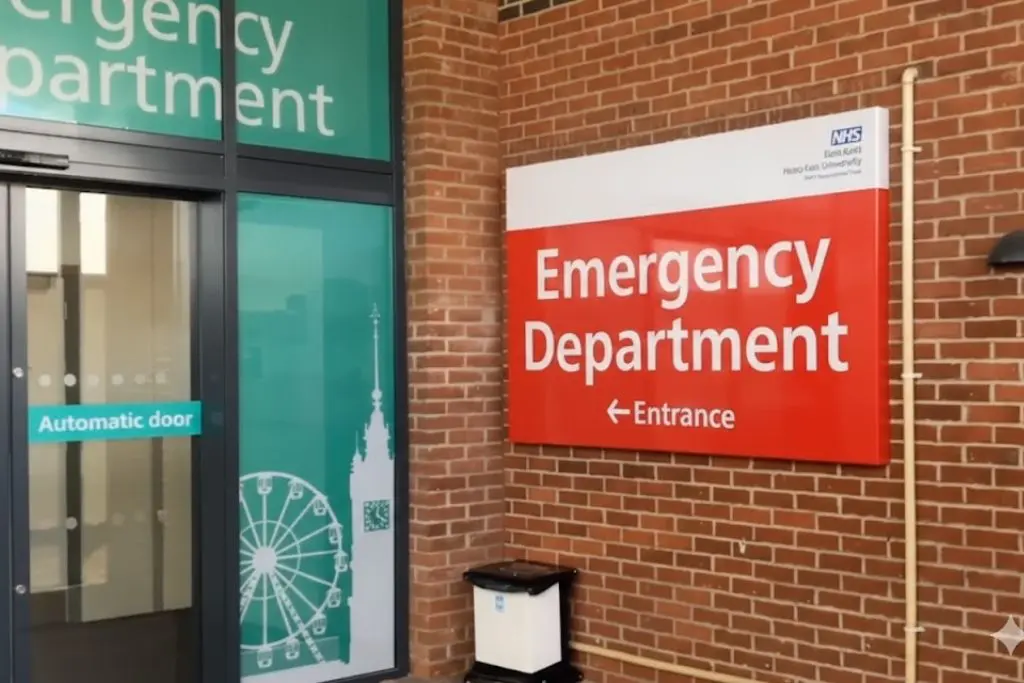
On Monday, the Queen Elizabeth The Queen Mother (QEQM) Hospital in Margate announced an end to its week-long restriction on visitors. This measure was originally a tactical response to surging winter infections and overcrowding. While doors have now reopened to the public, the East Kent Hospitals University NHS Foundation Trust has chosen to maintain its “critical incident” status.
This formal declaration indicates that the hospital’s ability to provide standard care is severely hampered. High patient volumes and limited bed availability continue to dictate the current emergency footing.
Sustained clinical pressure in Margate
The trust first declared a critical incident on 12 January. A sharp increase in admissions effectively exhausted the hospital’s bed capacity. This left the emergency department struggling to process new arrivals.
A trust spokesperson confirmed that the hospital continues to navigate “exceptionally high demand.” By declaring a critical incident, the NHS signals that a trust may no longer be able to maintain its usual clinical priorities. It is a move reserved for periods where patient safety risks are at their most acute.
New protocols for visitor access
The return to standard visiting hours comes with new caveats. To prevent further viral outbreaks, the trust has implemented several strict safety protocols.
Hospital management advises families to verify ward status before they travel. Specific bays frequently undergo rolling closures to manage the spread of norovirus. Furthermore, the trust has requested that only one individual visit a patient at any given time. Anyone who has displayed symptoms of illness is barred from the facility. They must remain clear of symptoms for at least 48 hours before entering.
Strategic rationale for the ban
The suspension of visiting rights was a reactive measure to “sustained pressures” across the regional health network. Senior leaders at the Margate site argued that limiting footfall was essential. They needed to protect both staff and the vulnerable patient population from a rising tide of norovirus.
Sarah Hayes, Chief Nursing and Midwifery Officer, acknowledged the distress caused by the ban. However, she defended the decision as a necessity. She described patient safety as the “absolute priority” during the peak of the winter surge. The measure was designed to provide clinical staff with the space needed to manage high-acuity cases. It removed the added complexity of a crowded ward environment.
Capacity and the “bottleneck” effect
The QEQM recently reached a threshold where available beds were virtually non-existent. This created a significant “bottleneck.” It prevented the timely transfer of patients from A&E into specialist wards.
Environmental factors, including a recent spell of freezing weather, have exacerbated these issues. A rise in frail patients suffering from acute respiratory conditions has further congested the system. By pausing visits, the trust aimed to streamline the discharge process. This allowed medically fit patients to return home more efficiently.
Public health directives
Despite the easing of visitor restrictions, health officials are urging the community to bypass the emergency department. People should only attend for life-threatening issues.
Navigating alternative care
To preserve resources for the most critically ill, the trust recommends:
- NHS 111: Using the digital or telephone service for urgent clinical guidance.
- Community Pharmacies: Seeking advice for minor ailments and prescription needs.
- Urgent Treatment Centres (UTCs): Attending local hubs for injuries that require professional attention but do not constitute an emergency.
Status of emergency services
The QEQM’s emergency department remains operational for life-threatening scenarios. However, management has warned that those presenting with minor conditions will face “significant delays.” Clinical teams are currently mandated to prioritise the most unstable patients as they manage the ongoing surge.
Regional health outlook
The crisis at the QEQM is a microcosm of wider instability across the South East. Similar critical incidents have been declared by trusts in Surrey and Sussex this month.
The confluence of influenza, norovirus, and high staff absence has created a precarious environment for regional healthcare. Local officials are currently negotiating with social care providers. They want to accelerate the transfer of patients out of hospital settings. This remains the primary strategy for restoring bed capacity.
Path to de-escalation
The trust has not provided a timeline for when the critical incident status might be rescinded. Such a move depends entirely on a sustained decrease in admissions. A corresponding rise in vacant beds is also required.
For the duration of this period, the hospital remains on high alert. Residents are encouraged to monitor official channels for any sudden shifts in ward access. For the time being, the QEQM continues to operate under the most strenuous conditions of the winter season.