Margate’s historic Scenic Railway, a Grade II listed icon and the oldest ride of its kind in the UK, will never carry passengers again.
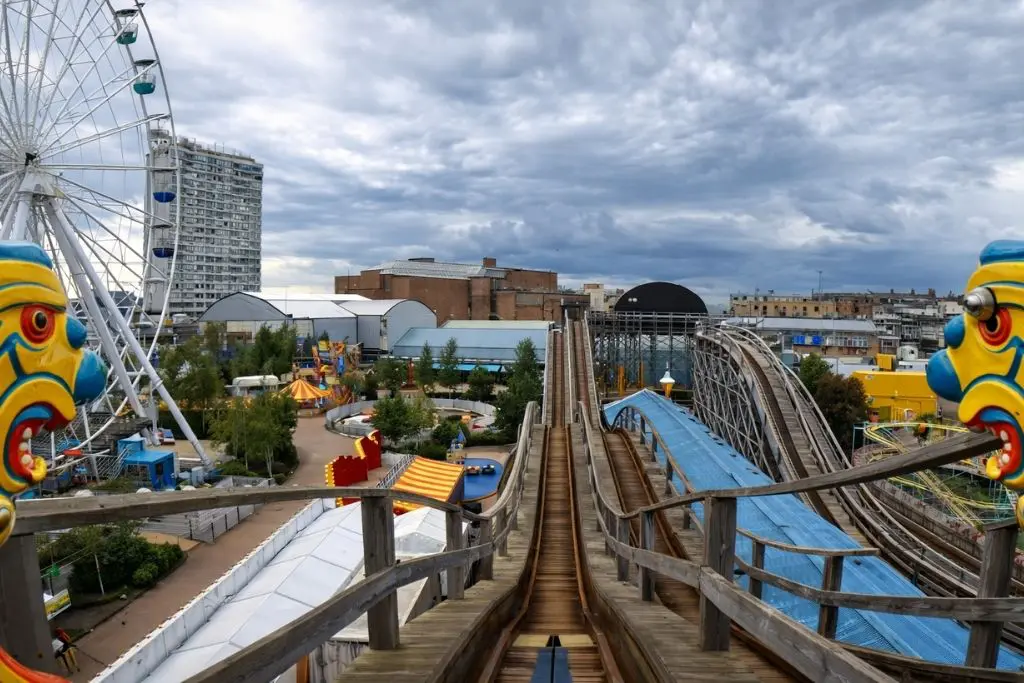
The announcement came from Dreamland bosses this week, effectively silencing months of local whispers. After 106 years of seaside thrills, the timber structure has reached a definitive terminus. It follows a quiet period for the coaster after a train jumped the rails back in August 2024. Despite surviving fires, arson, and coastal gales for over a century, experts now say the wood has simply run out of road.
Safety, as ever, was the deciding factor. Park management confirmed that keeping a 1920s-era ride up to 21st-century safety codes is no longer a viable task. For a town that used this vintage relic to spark its own economic comeback, the news signals a somber close to a massive chapter in British fairground history.
Investigation: The final mechanical verdict
The road to this closure started with a mechanical breakdown on a Saturday afternoon in August 2024. During a routine session, a train partially derailed. Fortunately, nobody was hurt, but the impact did a number on the fragile timber frame and the track bed.
Specialist heritage engineers were brought in to perform a forensic “autopsy” on the structure. Their final reports make for cold reading. They found that the hundred-year-old timber can no longer handle the sheer physical stress of a moving rollercoaster. If Dreamland wanted to get the wheels turning again, they would basically have to tear the whole thing down and build a modern replica from scratch.
In today’s economic climate, that kind of total rebuild just isn’t on the cards. A spokesperson for the park called the situation a “profound loss” for the heritage community. However, they were firm on one point: nostalgia cannot come at the expense of public safety.
A century of beating the odds
First opening its gates in 1920, the Scenic Railway was the crown jewel of the Kent coast. It is what they call a “brakeman” coaster, which is a rare breed. Instead of modern computers controlling the speed, a worker actually stood on the moving train and pulled a manual lever to slow it down through the bends.
The ride has lived through more disasters than most buildings:
- Mid-century blazes: Huge fires in 1949 and 1957 gutted large parts of the track, yet it was rebuilt both times.
- The 2008 arson: This was almost the end. A deliberate fire destroyed 25 per cent of the structure, including the station.
- The 2014 storms: Even while it was being restored, high winds toppled the exposed wooden frame.
Each time it fell, the people of Margate pulled together to save it. After a massive campaign, it eventually reopened in 2015 thanks to an £18 million investment. But this time, the problem isn’t a one-off fire; it is the internal structural integrity of the wood itself.
Preservation: A monument, not a ride
The coaster’s Grade II* listing means it is legally protected. You cannot just knock it down to build flats. Because of this, the wooden skeleton will stay right where it is. It will become a “static monument,” meaning it is something to look at, but not to ride.
This shift fits with how Dreamland has evolved lately. It has moved away from being just a fairground and is now one of the UK’s biggest outdoor music venues. It regularly draws thousands of fans for massive concerts and festivals. While the “silent” coaster will not be rattling overhead anymore, it will still serve as a historic, towering backdrop for world-class musicians.
The fallout for Margate’s tourism
For a long time, the Scenic Railway was the main reason people hopped on the train from London. Local shop and hotel owners are understandably worried. To them, the coaster was the ultimate symbol of Margate’s “cool” rebranding.
Campaigners who spent decades fighting to protect the site from developers are equally gutted. They had hoped for one more miracle repair. Now, Historic England will step in to help the park figure out how to keep the timber frame standing for the long haul. The goal is to make sure people can still see the 1920s engineering up close, even if the thrill of the drop is gone for good.
The 106-year legacy
John Henry Iles, the man who brought the design over from America, wanted to change the British seaside forever. He succeeded. In 2002, it was the first rollercoaster in the country to be listed. It survived being abandoned in 2003 and the fire in 2008.
But the 2024 derailment was one hurdle too many. It remains a legendary piece of European history. Even in its retirement, it stays a permanent part of the English seaside’s soul.